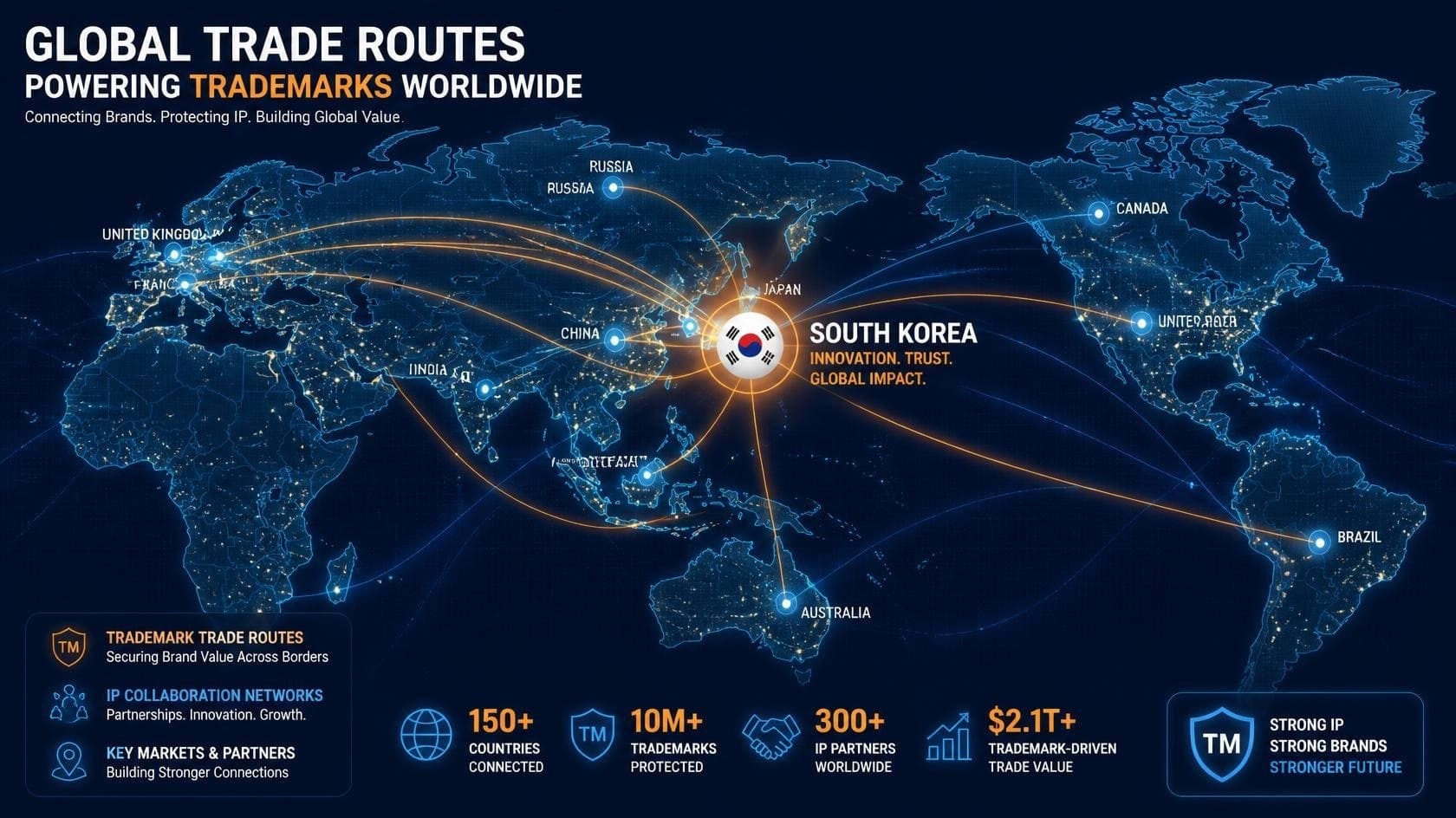
The global intellectual property (IP) landscape is undergoing a notable shift. According to the latest annual reports from the World Intellectual Property Organization (WIPO) on the WIPO Madrid System, international trademark filing activity has increasingly shifted toward Asia.
Among Asian economies, South Korea continues to demonstrate strong activity in international brand protection, securing the 9th rank globally for international trademark filings under the Madrid Protocol.
For international businesses, foreign brand managers, and tech startups planning to enter or expand within South Korea, these statistical trends offer practical context on how global companies approach trademark protection across Asia.
Key Highlights from the WIPO Madrid System Data
The global distribution of international trademark applications under the Madrid Protocol reveals several notable trends regarding regional growth and sector activity.
[Global Trademark Shift] ──> Asia Application Share Rises ──> South Korea Ranks 9th ──> Tech & Software (Class 9 & 42) Lead Filings
1. The Regional Shift Toward Asia
- Rising Application Share: Applications originating from Asian countries have grown significantly over the past decade, rising from 15.5% in 2015 to 25.6% in recent WIPO figures.
- Changing Share in Europe: Over the same timeframe, Europe's relative share of global Madrid filings shifted from 63.6% down to 50.8%, highlighting broader international participation across Asian markets.
2. South Korea’s Global Ranking
- Top Country Standings: Leading filing origins include the United States, Germany, and China. South Korea maintains a strong position at 9th place globally, recording steady year-over-year application growth.
- Corporate Participation: Major South Korean enterprises across cosmetics, consumer electronics, biotechnology, and automotive sectors regularly utilize the Madrid System to extend brand protection into North America and Europe.
3. Leading Industry Sectors (NICE Classification)
- Technology & Software: Class 9 (Computer & Electronic Software) leads international applications, followed by Class 35 (Advertising & Business Management) and Class 42 (Scientific & Software Development Services).
- Digital Transformation: The prevalence of software, SaaS, and digital platform applications reflects an increasing emphasis on digital asset protection in international trade.
Direct Filing vs Madrid System for South Korea Entry
When expanding a brand into South Korea, foreign companies generally evaluate two primary registration routes through the Ministry of Intellectual Property (MOIP)—South Korea’s central IP authority.
| Filing Process | Submitted directly through a local representative | Filed via home IP office designating South Korea |
| Language & Currency | Korean language; KRW currency | English/French/Spanish; CHF currency |
| Initial Examination | Evaluated directly by MOIP examiners | Forwarded by WIPO to MOIP for local examination |
| Office Action Response | Handled locally upon receipt | Requires a local Korean attorney if a refusal is issued |
Practical Considerations for Foreign Brands Entering South Korea
Based on industry statistics and reported administrative practices, foreign enterprises entering South Korea often keep the following general operational considerations in mind:
1. Timely Brand Registration
Because South Korea operates on a first-to-file system, securing trademark rights prior to commercial product distribution or localized marketing campaigns helps reduce potential brand conflicts or unauthorized third-party filings.
2. Accurate Specification of Designated Goods
The Korean examination system maintains specific standards regarding product descriptions. Applications covering software (Class 9) or digital services (Class 42) benefit from clear, standardized item descriptions under the Nice Classification to help minimize potential administrative inquiries during examination.
3. Preparing for Administrative Communications
When designating South Korea through the Madrid System, international applicants may occasionally receive a provisional refusal or Office Action from local examiners concerning translation accuracy or specification scope. In such cases, coordinating with local patent attorneys or qualified legal counsel helps address formal administrative requirements efficiently.
Conclusion & Summary Checklist
The latest WIPO Madrid System figures highlight the expanding role of Asian markets in global trademark administration. As South Korea's MOIP continues to process a high volume of international designations, early planning and systematic portfolio maintenance remain standard practices for foreign companies operating in the region.
Checklist for Foreign Enterprises:
- Determine whether Direct Filing or Madrid System Designation best aligns with your timeline.
- Verify that software and digital asset specifications conform to standardized NICE classifications.
- Conduct pre-filing availability searches in South Korea prior to launching localized products.
- Consult licensed local patent attorneys or legal specialists when responding to official administrative notices.
Disclaimer: This article is written for general informational and educational purposes only based on publicly reported WIPO statistical data and news reports. It does not constitute formal legal advice. Foreign enterprises seeking specific legal counsel regarding South Korean trademark registration or Madrid System filings should consult a licensed patent attorney or legal professional.


