Before expanding your e-commerce business or launching a D2C brand in South Korea, timing is everything. Securing your trademark before your official launch is the safest route, but many global sellers wonder: "How long do I have to wait before my brand is legally protected in Korea?"
The processing time under the Ministry of Intellectual Property (MOIP) - formerly known as 'Korean Intellectual Property Office (KIPO)' - depends heavily on the pathway you choose.
In this post, we will break down the realistic standard timeline and look at a legal shortcut that can slash your waiting time by more than half.
The Standard Trademark Registration Timeline in Korea (12-18 Months)
If you file a trademark application through the regular pathway without any special requests, the entire process generally takes 12 to 18 months to complete.
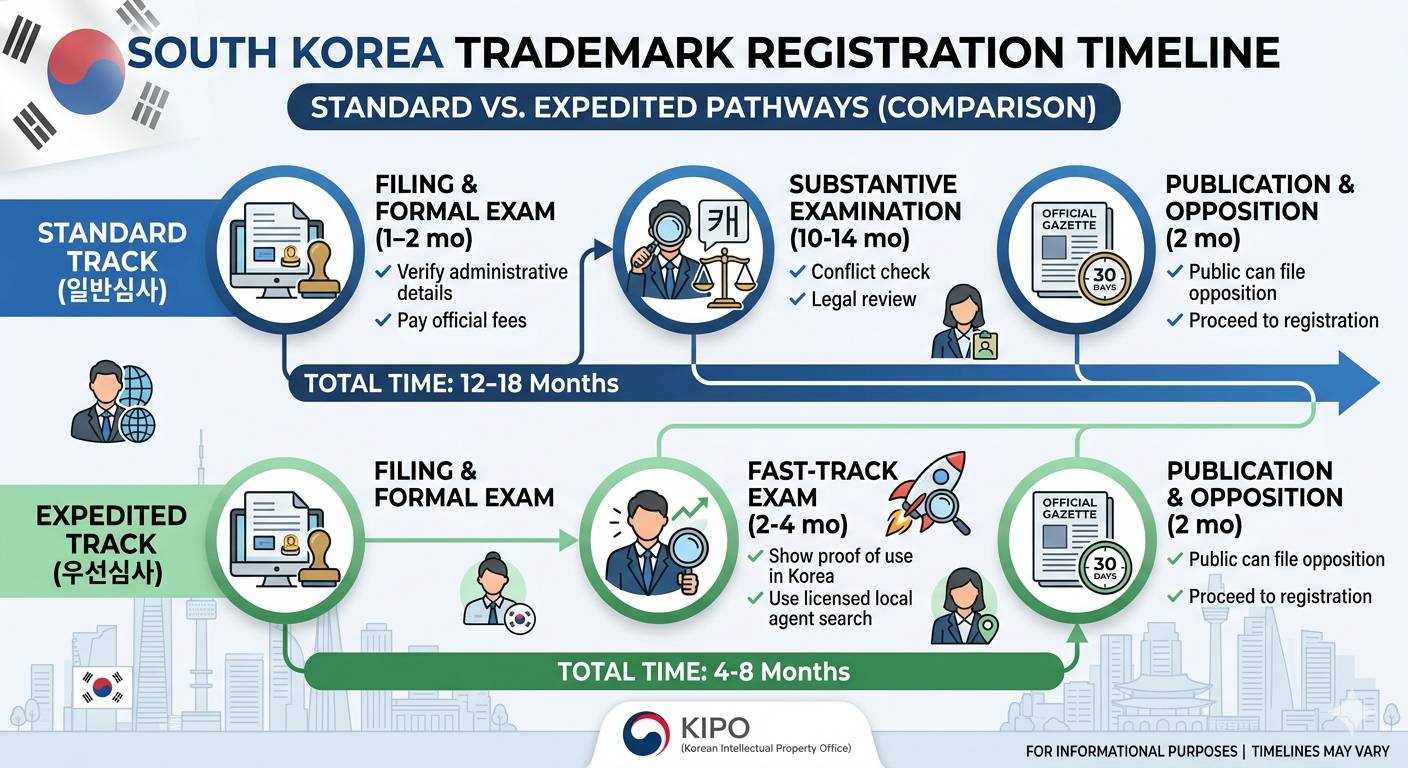
The standard journey follows three main phases:
- Filing & Formal Examination (1–2 Months): MOIP checks if your application meets all basic administrative requirements (correct entity details, proper fees paid).
- Substantive Examination (10–14 Months): A MOIP examiner thoroughly reviews your trademark to see if it conflicts with existing brands or violates local trademark laws. This is the longest waiting period.
- Publication & Opposition Period (2 Months): If it passes examination, your trademark is published in the official gazette. Anyone has exactly 30 days from the publication date to file an opposition if they believe your mark shouldn't be registered.
If no oppositions are filed and no refusal grounds are raised, your trademark is officially registered upon paying the final registration fee.
Shortcut: How to Fast-Track Your Application via Expedited Examination
Waiting over a year can be risky if your products are already live on platforms like Coupang, Naver, or Amazon Korea. To solve this, KIPO offers a system called Expedited Examination (우선심사).
By utilizing this fast-track system, you can cut the substantive examination phase down drastically, bringing the total timeline down to just 4 to 8 months.
To qualify for this fast-track option, a foreign seller usually needs to fulfill specific conditions, such as:
- Showing proof that you are currently using (or making urgent preparations to use) the trademark in South Korea.
- Hiring a licensed local agent to conduct an official prior trademark search report to submit alongside the application.
While it requires additional official fees and local agent costs, it is the most popular route for active cross-border sellers who need immediate brand protection.
Summary Table: Standard vs. Expedited Trademark Processing
| Stage / Pathway | Standard Track (일반심사) | Expedited Track (우선심사) |
|---|---|---|
| MOIP Examination Phase | 10 – 14 Months | 2 – 4 Months |
| Public Opposition Window | 30 Days (Fixed) | 30 Days (Fixed) |
| Total Estimated Time | 12 – 18 Months | 4 – 8 Months |
| Best Suited For | Long-term planning / Budget filing | Active sellers / Urgent brand protection |
Key Strategic Takeaway for Global E-commerce Sellers
Because of the 12-to-18-month standard timeline, waiting until you hit high sales volumes in Korea to file a trademark is a dangerous gamble. A competitor or a local squatter could easily file ahead of you during that year of waiting.
If you have budget constraints, filing via the Standard Track as early as possible would be recommended — even during your product development phase. However, if your inventory is already moving into Korean fulfillment centers, investing in the Expedited Examination track could be the smartest business decision to lock down your digital assets securely.
To navigate these strict timing windows and ensure your fast-track evidence is submitted correctly without procedural rejection, consulting with a specialized cross-border trademark professional is highly recommended.
(Disclaimer: This article is for informational purposes only and does not constitute formal legal advice. Timelines may vary based on individual cases and MOIP's internal workload.)


